Mostrando entradas con la etiqueta Games. Mostrar todas las entradas

domingo, 5 de enero de 2014

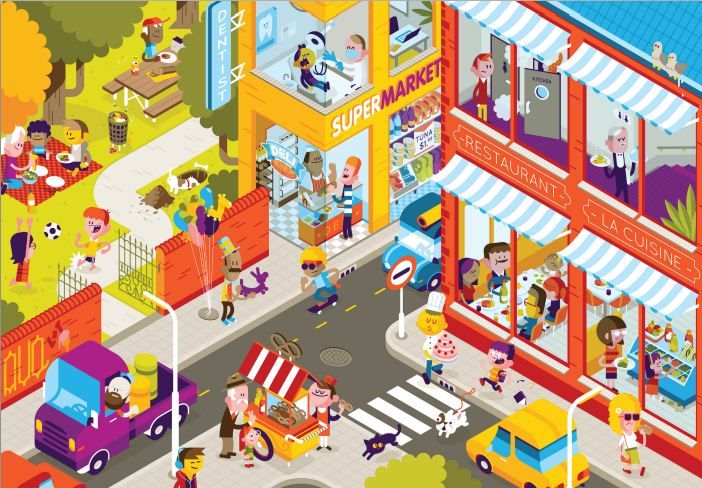
Food Issues Games

  Allergens are all around us and sometimes not where we expect. Search the picture [...] to help them learn about where the allergens may be hiding and to teach them about where other people's allegerns may be, too.


This activity also inspires us to create other activities 
such as walking around the school or going to the cafeteria and discuss about the allegerns which are present.


2

Online game: “Rocket Blast”

foodallergykidspot.com offers this fun game where a rocket needs fuel by selecting the appropiate food (good metaphor about eating healthy food to make our bodies work!). 


This games could be helpful to work with food vocabulary at the same time as creating awareness about food allergies.

Respect Games & Activities


-    Alike and Different (Thumbprints).  Set out white 3" x 5" cards, a black ink pad, a pen, and a magnifying glass. Ask the children to make prints of their thumbs by pressing them on the ink pad and then on the cards. Label each print with the child's name. Let children use the magnifying glass to see how the prints are alike and different. Point out that everyone has patterns on the skin of their fingers and each person's fingerprints are different from anyone else's. 


-          Listening and Carving . Tell the children that some people from other cultures enjoy carving things from stone. For example, some Inuit artists carve animals out of stone. They pick out a stone and sit with it, spending time with the stone and getting to know it. They listen to the stone, and when they know the stone well, they find the shape or animal that the stone wants to become. Then they begin carving the stone in that shape. Show the children pictures of some of these carved animals if you can find them in an encyclopedia or at the library. Give each child a piece of sandstone (available in art supply stores). Sandstone is a rock made of compressed sand. It can easily be carved by rubbing the sand off with a plastic knife. Encourage the children to carry the stone with them all morning or afternoon. Tell them that after lunch or the next day they can carve their stone into any shape they want. Encourage them to listen to their stone. Maybe it will tell them what shape it wants to become. 


-          Proverbs and Traditions . Ask children to talk with their families about sayings that are common in their culture or traditions that they have in their families. Choose one broad topic, such as love, birthdays, holidays, or time. Chart the responses to see how different cultures express similar ideas. Children might also be fascinated to compare the different names they use for their grandparents (Williams, 1989). Listen and watch for children's comments that can lead to discoveries about each other. 


-          Activity: The Salad. America is called a melting pot referring to how many different cultures we have living in America.  Show an example of a melting pot by making a tossed salad in front of your children.  First just add the lettuce; by itself the lettuce is boring.  Now one at a time, add the different vegetables and then toss the salad together.  By adding the vegetables to the lettuce you have ingredients that have their own identity, while making the salad better as a whole with different colors and shapes.  Try to use vegetables with a variety of color.  Remind students that it doesn’t matter if they like the taste of the vegetables, in order to understand the thought or concept.


Recycling Games


-          Trash Can Relay. Set up five classroom trash cans in an obstacle course. The first student on the team runs the course, weaving in and out around the cans. When the student reaches the last can, he or she turns around and weaves back to the team. The runner taps the next team member in line, who takes his/her turn running the course.

-          Bottle Bowling. Set up bowling pins made from 2-liter soda pop bottles, small bleach bottles, or tall dishwashing detergent bottles. Tip: Put about an inch of sand in the bottom of the bottles; the pins will still be easy to bowl down, but the bottles won't fall as easily as they would if there was no sand in them. 

-          Waste No Water. Fill a clean open-topped non-breakable container (a plastic spaghetti sauce jar or a soup can work well) with water for each team; be sure the containers are the exact same size and filled to the brim with water. Set a start and finish point. At a signal, the first runner heads for the finish line, walks over the line, turns around and heads back to his or her team, and passes the container to the next person in line. At the end of the race, the team with the most water still in the container is the winner. 

-          Newspaper Relay. Provide a stack of newspapers for each team and have team members divide the stack evenly among themselves. Set up a paper bag or recycle bin (or whatever container your community uses for recycling newspaper) at a finish line. At a signal, the first member of the team carries his or her stack of newspaper to the finish line, deposits it in the container, runs back to the team, and taps the next person in line.


-          Putt for Points. Paint five coffee cans with bright colors. Paint or draw a point value on each can. (Suggestions: Paint the number 5 on one can, the number 10 on another, 15 on a third, 20 on a fourth, and 50 on the fifth.) Set up the coffee cans in a row. Give students three golf balls and three chances to accumulate points for their team. 

-          Tumbling Towers. This activity can be done one team at a time. Provide a recycle bin full of clean aluminum cans (for example, soda pop cans). At a signal, students have 2 minutes to stack the cans one atop another. Each student takes a turn at building a tower by stacking cans one atop the other. The student on each team who builds the tallest tower then represents his or her team in a final team-against-team stacking competition.
An online game